USA Fast Shipping - Love it or Return It
QUICK ANSWER FOR HONDA OWNERS
Written by the YOUCANIC technicians in Towson, Maryland, from the UCAN-II Pro coverage database and our own shop work. Updated October 24, 2026.
A Honda keeps running long after the dash starts collecting lights, and the parts store code reader only talks to the engine. The VSA modulator, the airbag unit, the CVT, the electric parking brake, the electric power steering and the keyless and body modules all answer through the same port, but only to a tool that speaks to them. The tools below are what we use in our own shop in Maryland to reach every module on a Honda, run the bleeding, learning and reset routines the dealer charges an hour of labor for, and clear the light for good. The coverage database behind the UCAN-II Pro lists the Accord, Civic, CR-V, Fit, Element, Clarity, CR-Z and Crosstour, their hybrid and plug in versions, and the rest of the range. Pick by what you need to do.

Reads and clears engine codes from your phone and gives you a live gauge dashboard. It does not see VSA, SRS, transmission or body modules. Right if the only light you care about is the engine one.

Full system, bidirectional, lifetime free updates. Reads and clears every control unit, runs the function tests and the Honda service functions: ABS and VSA bleeding, brake pad maintenance mode, PCM and TCM reset, steering angle and torque sensor learn, TPMS sensor ID learning, radar aiming. The tool to own if you keep a Honda running.

Same scanner, shipped both ways free, with a refundable deposit that comes back when the scanner does. For the one VSA bleed, SRS code or parking brake pad change you need done once.
Every Honda in the coverage database plugs straight into the 16 pin port under the dash. There is no extra connector and no gateway to unlock, so the UCAN-II Pro is the whole kit. Functions still vary by model and year, so check your exact vehicle before you order.
On the tablet you pick the control unit, then the function category, then the routine. Honda uses four categories: Function Test (bidirectional tests), Inspection (engine and transmission tests), Special Functions (resets and learns) and Bleeding. These are the routines the coverage database lists for Honda, grouped by the job you are doing. Names are as they appear on the tablet. Coverage varies by model and year, so check yours before you order.
| Job | Routines in the coverage database | Where it lives on the tablet |
|---|---|---|
| Brakes, ABS and VSA | Left Front, Right Front, Left Rear and Right Rear Solenoid and the four VSA valve steps, Brake Light Relay/TSA Relay Test, ALL SENSORS, LATERAL G & YAW RATE SENSORS, Longitudinal G Sensor Learning, Sensor Calibration, Brake Pad Maintenance Mode, Accumulating Pressure Test, Increasing Master Cylinder Pressure Test, Regenerative Brake Test, Hydraulic Booster CAS Test, BRAKE BOOSTER 1 and 2, ACC Brake, CMBS Brake | ABS, Bosch ABS and VSA, EPB, ESBCS and HBS › Bleeding, Special Functions and Function Test |
| Engine, fuel and emissions | Injector Test, All Injectors Off, ONE INJECTOR STOP, Compression Test, EGR TEST, IMRC and IMT Test, IACV TEST, VTC TEST, VTEC TEST, VTEC LOW V/T CHECK, ETCS (TAC) TEST, EVAP Test, O2S TEST, Idle Speed Adjust, Radiator Fan Relay Test, A/C Clutch On/Off, ACG On/Off, FUEL PUMP ON and OFF, TC Wastegate, Bypass and Boost Control Solenoid Valve Tests, Glow On/Off, Fuel Heater On/Off, Intake Shutter Test, MAF Sensor Learning Clear, A/F Sensor Learning Clear, ISV Forced Learning, ECM/PCM Reset, PCM/TCM Reset, VIN CHECK, Readiness Codes, CRANK (CKP) PATTERN, TP POSITION CHECK, Main Fuel Tank Alcohol Content Write Data, IDLE STOP STARTER COUNTER CHECK, DPF Regeneration, DPF Differential Pressure Sensor Initial Learn, Reset Calculated PM Value, IQA Data Status and IQA Write Data | Engine System (PGM-FI), Diesel Engine System and DBW › Inspection and Special Functions |
| Transmission and drivetrain | Shift Solenoid A, B and C, Lockup Solenoid Test, Shift Lock Solenoid Test, Electrical Oil Pump Activation, Clutch Pressure Control Solenoid Valve A, B and C, Pressure Test Assistance Mode, Start Clutch Feedback Learn, Inhibitor Solenoid, CAS Solenoid A and B, ATTS TEST SHORT TIME MODE, NEUTRAL REWRITING, NEUTRAL ADJUSTMENT, PCM/TCM Reset | Transmission System (AT), Automatic shift system (A/T), CVT, SH-AWD and ATTS › Inspection and Special Functions |
| Steering, suspension and driver assistance | STEERING ANGLE, Steering Angle Sensor, STEERING END POSITION LEARNING, EPS Steering Angle Sensor Value Clear, Torque Sensor Learn, MA-EPS Control ON/OFF, SENSOR 0 (ZERO) POSITION MEMORIZATION, Damper Stroke Calibration, Damper Force Operation Test, ACM Reset, Front and Rear ACM Solenoid ON/OFF, Radar Aiming, Radar Correction for Windshield, CMBS (CMS) Activation History, Left and Right BSI Radar Operation Check, LDW OFFSET, GAIN ADJUST, STATIC CAMERA AIMING, FCW Drive, Left and Right Side Lane Departure Warning, City Brake Active System Drive | EPS, 4WS, ADS, ACM, ACC, CMBS, BSI, FCW LDW and LKAS › Special Functions and Function Test |
| Hybrid and electric powertrain | SOC PRESET, MOTOR ROTOR POSITION CALIBRATION, IPU MODULE FAN DRIVE TEST, FORCED NON ASSIST MODE, EDLC Module Discharge and Charge Test, EDLC Module Discharge for Removal or Disposal, EDLC Module Usage History Clear | IMA, Electric Powertrain / IMA, Power Unit (PCU), New energy battery (EV) and Capacitor System (EDLC) › Special Functions, Inspection and Function Test |
| Body, lighting, seats and airbags | ODS Unit Initialization, OPDS Initialization, SWS Initialization, Seat Output Check, After A Vehicle Collision, After Replacing Front Passenger's Seat Components, CUSTOMIZE RESET, A/C Fan Minimum, Indicator Light, Information Display, Alarm Test, Buzzer Test, LIGHT CHECK, BUZZER CHECK, plus function tests on the Body Electrical groups: Adaptive Front Lighting, Auto High Beam, Auto Light Leveling, Door Locks, Front Panel, Gauges, Lighting, Power Seat and Power Mirror, Power Sliding Door, Power Tailgate, Power Trunk Lid, Security, Telematics, Wiper | SRS, Seat load cell (SWS) and the Body Electrical modules › Inspection, Function Test and Special Functions |
| TPMS and tires | Sensor ID Learning, ALL SENSORS, Deflation Warning System, MODE CLEAR, Pulser Test, Threshold Rewriting, and programming the U360 replacement sensor from the tablet | Tire Pressure Monitoring System (TPMS) › Special Functions |
The Honda coverage database carries the same catalog of 60 systems for every model and shows the subset a given car actually has when you connect. Two entries pulled from it, with the control units the UCAN-II Pro lists. Every unit gets fault codes, live data and, where the database shows it, function tests, inspections and special functions.
| Vehicle in the database | Control units | Examples of what it lists |
|---|---|---|
| Honda FCX (the system catalog, chassis and powertrain side) | 60 | Bosch Anti-Lock Brake System (BOSCH ABS), Anti-lock brake system (ABS), Active Engine Support System (ACM), Active / Automatic Shock Absorber System (ADS), Active Torque Converter System (ATTS), Vehicle Acoustic Alarm System (AVAS), Capacitor System (EDLC), Driving Visual Blind Spot System (BSI), Transmission System (AT), CVT, Diesel Engine System, Electronic Brake System (EPB), Electronic Power Steering System (EPS), Electronic vacuum pump (EVPS), Engine System (PGM-FI), Engine Network Gateway (CAN GATEWAY), Multi-view camera and parking assist (MVC/PAS), SH-AWD, Airbag System (SRS), Adaptive Cruise (ACC), Instrument Display (GAUGE), Tire Pressure Monitoring System (TPMS) |
| Honda Zest (the same catalog, body side) | 60 | The Body Electrical groups: Adaptive Front Lighting, Auto High Beam (High Beam Support System), Auto Light Leveling, Door Locks, Front Panel, Gauges, HF Link/Tel, HVAC/Climate Control, Keyless Transmitter, Lighting, Power Seat/Power Mirror, Power Sliding Door, Power Tailgate, Power Trunk Lid, Power Windows, Security, Telematics, Wiper, plus Urban Active Brake System (CBAS), FCW LDW, Hydraulic booster system (HBS), IMA, Intelligent Parking System (SPS), Night Vision System (INVS), Variable Valve Timing System (SVT) |
The FCX and Zest are Japanese market cars, but Honda's database is organized by system catalog rather than by model, so a US Civic, Accord, CR-V, Fit or Element shows the same module names for the systems it carries.
Key and immobilizer programming, control unit reflashing and anything else that needs a live connection to the Honda server are i-HDS and dealer jobs, and no aftermarket scanner does them. For diagnosis, live data, function tests and the service functions above, which is what most owners and independent shops actually do week to week, the UCAN-II Pro covers it at one price with no renewal fee. Functions vary by model and year, so check your car or email support@youcanic.com with your VIN and the function you need before you order.
Yes. The bleeding routine cycles each ABS and VSA solenoid in turn so the trapped air comes out, which is the step a gravity bleed cannot do after a modulator or line replacement. The ABS bleeding guide explains how it runs.
Yes. Brake Pad Maintenance Mode retracts the parking brake motors so the pistons can be pushed back, then releases them when you are done. The parking brake guide walks through it.
The steering angle sensor learn, and on most models the lateral G and yaw rate sensor calibration, both in the VSA module. Torque Sensor Learn and Steering End Position Learning cover the electric power steering if the rack or column was replaced.
No. Key and immobilizer programming need the Honda server through i-HDS. The UCAN-II Pro does diagnosis, live data, function tests, learning procedures and the service functions listed above.
Yes. The rental is a one week rental plus a refundable deposit, shipped free both ways. Most Honda owners rent it for a VSA bleed, an SRS light or a parking brake pad change.
Use the coverage checker by model and module, or call 1-888-959-4265, Monday to Friday 9 AM to 4 PM Eastern, and a technician will tell you plainly. If it does not do what you need, we will say so. Every scanner also comes with 31 day returns, no questions asked.
Working on a different make? See the scanners by make hub, the service functions explained one job at a time, and the step by step Honda repair guides on youcanic.com.
4.82 / 5.0
273 Reseñas
Cuando su automóvil se avería, la frustración y la ansiedad de enfrentar una tarifa de diagnóstico de $200 en el concesionario pueden ser abruma...
Ver todos los detalles4.83 / 5.0
12 Reseñas
The Same UCAN-II Pro. Same Warranty. Same Lifetime Updates. $100 Less. An open box UCAN-II Pro is a scanner that came back to us, was tested o...
Ver todos los detalles4.92 / 5.0
13 Reseñas
Desglose de los costos Costo de alquiler de $ 85 El depósito de seguridad de $400 es totalmente reembolsable . Agregue esto al carrito. ...
Ver todos los detallesThe Gauge Cluster Your Car Should Have Come With, On Your Phone The YOUCANIC UCAN-GO is a Bluetooth 5.1 OBD2 adapter that streams live speed, ...
Ver todos los detalles5.0 / 5.0
2 Reseñas
El escáner YOUCANIC OBD-II le permite leer y borrar las luces de verificación del motor. Puede leer códigos de falla y borrarlos en cualquier ve...
Ver todos los detalles4.81 / 5.0
26 Reseñas
Descubra el poder de las inspecciones flexibles y en profundidad con el videoscopio USB YOUCANIC. Equipada con una sonda con cámara en la punta, e...
Ver todos los detalles4.83 / 5.0
6 Reseñas
Imagínese que está a punto de salir para una reunión importante o un viaje por carretera muy esperado, pero su automóvil no arranca. La frustración...
Ver todos los detallesOne TPMS Sensor For Both Frequencies. Programmed By The Scanner You Already Own. The YOUCANIC U360 is a blank, universal tire pressure sensor ...
Ver todos los detallesNeed One TPMS Sensor And No Tool To Program It? Send Us The ID. We Ship It Ready. A dead tire pressure sensor normally means a trip to a shop ...
Ver todos los detallesYOUCANIC Scanner – Battery Performance and Overall Review
When I first powered on the scanner, I was concerned about the condition of the battery. The unit arrived showing approximately 80% charge, while the system indicated that the last full charge had occurred about 169 days earlier.
During the initial use, the displayed battery level dropped unusually quickly. For example, during one test it decreased from approximately 72% to 52% in only 28 minutes of operation. Initially, this made it appear that the battery might be defective or had significantly degraded capacity.
Instead of immediately concluding that the battery was bad, I decided to perform several discharge and recharge cycles. During the first cycle, I used the scanner until the battery reached approximately 35% and then fully charged it. During the second cycle, I discharged the battery to approximately 10% and then charged it completely to 100%. That full charging cycle took approximately 4 hours and 14 minutes.
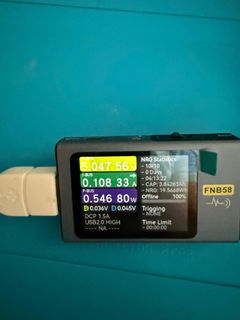
I also monitored the charging process using external USB power meters, measuring the charging voltage and current and observing how the charging current gradually decreased as the battery approached 100%. Based on these measurements, the charging process itself appeared normal.
After these cycles, the battery indication became significantly more stable. During my latest test, I continuously used the scanner for 1 hour and 33 minutes, performing vehicle scans, reading live data, checking OBD-II monitors, and exploring different diagnostic functions. At the end of that session, 71% battery remained. In other words, the scanner consumed 29% of its displayed battery capacity in 93 minutes. If approximately the same discharge rate continues, this corresponds to roughly 5–5.5 hours of continuous operation, which appears reasonable for this device.
Based on my experience, if a newly purchased scanner has been stored for a long period and initially appears to discharge unusually quickly, I would not immediately assume that the battery is defective. In my case, the behavior appears to have been related to an inaccurate State-of-Charge estimate after extended storage rather than clear evidence of actual battery failure. After two discharge/recharge cycles, the battery indication stabilized considerably.
I think this information may also be useful to YOUCANIC and its customers. If a customer reports unusually poor battery performance immediately after receiving a unit that has been stored for an extended period, it may be worth recommending one or two reasonably deep usage cycles followed by a complete recharge before determining that the battery itself is defective. This may allow the battery-management system to establish a more accurate State-of-Charge estimate.
As for the scanner itself, I am currently using it primarily for my own automotive diagnostic work, training, and working on my own vehicle rather than for commercial customer work at this stage.
After spending time with the device and exploring its capabilities, I can say that I am very satisfied with what it offers for the price. At this point, I consider it a very reasonable purchase in terms of the balance between cost and diagnostic capability. It provides full-system diagnostics, Live Data, OBD-II functions, on-board monitors, special functions, active tests, and many other capabilities that I am still learning and exploring.
Based on my experience so far, I believe this scanner is not only a very good tool for personal use and learning, but also appears capable enough for professional automotive diagnostic work. Of course, I will be able to evaluate its long-term professional performance more fully after using it on a wider variety of vehicles, but my experience so far has been very positive.
My next YOUCANIC equipment purchase will most likely be the four-channel automotive oscilloscope. I am going to wait a little longer before purchasing it because I currently use my own two-channel oscilloscope, and for my present diagnostic needs two channels are sufficient. As my automotive diagnostic skills and work develop, however, a four-channel automotive oscilloscope seems like a logical next step.
I have also installed a screen protector on the scanner for additional protection. Since diagnostic equipment is regularly handled in an automotive environment and I may eventually use this unit professionally, I think protecting the display is well worth doing.
Overall, after resolving my initial concerns about the battery indication, my experience with the YOUCANIC scanner has been very positive. I am continuing to learn and explore its capabilities, and at this price point I believe it is a very capable diagnostic tool and a very reasonable investment.
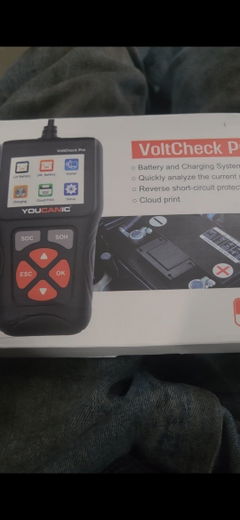
I've used several testers over the last 30 years. They have gotten smaller and better! This one is amazing and the price is great! I would definitely recommend it, if you're ir considering a battery tester.
Professional here, I have launch, xtool, and many others. I have used Ford, Honda, Hyundai, Subaru, and other dealer tools. This one is by far my favorite. It's easy to use and affordable. Lifetime support and free updates, with user friendly software is amazing.
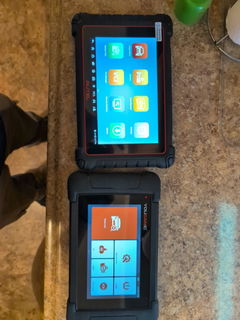
So i compared this to my trusted autel mk900bt, and heres an honest review, i paid for the unit myself, and despite having talks with support, and even the company founder himself, i wasnt able to score any freebies haha.
Pros that the youcanic beat the autel-
1. For live data, all the live data values have a recommended parameter value, example: if your one sensor is reading 10mv, and you have no clue what that means, the youcanic will tell you it should be .9-.11 indicating it's all good(i dont know if every bit is 100%, but i assume its all a great guideline)
2. Topology, i spoke to the support team who told me the topology works by actually communicating with the vehicle and plotting out the map of the systems, unlike something like Xtools that just takes a wild guess, although i do think topology is overated, and always has the risk of sending you down a wrong path, it's still good and cool to have over not having it.
3. Free updates, doesn't look like youcanic os going under soon, so that's a huge plus, they seem to care about their product.
4. Autovin scan is not subscription or Internet based, meaning you should be able to connect and automatically scan a vehicle without internet connection, without choosing make, model, submidel/ typing in vin, nice plus if you're mobile and dont have a good hotspot.
5. Scan time of vehicle (detecting vehicle and running diagnostics) takes roughly the same time as autel, 2 minutes. Some cars it was a few seconds faster, some slower.
6. Ive looked into all the scan tools, and this is the best bang for the buck, I'd avoid xtools/ gear wrench, not a fan of topdon, thinkacar, as they are a bit pricey and you should just chose autel, ancel/ foxwell are underwhelming, and autel (mk/ mx 900) is the only other scantool I'd chose for the $500ish range, it is about $50 more than this.
7. Although the autel has some fancy shop management features that kinda beat the youcannic, the youcanic's shop management set up seemed good enough and many times simpler from my quick messing around with, and I feel like it's easier and fine vs the autel.
Now some cons that ive already talked to the company about and they listened to my concerns quite genuinely.
Currently (may be subject to change):
1. The case sucks, the latches are junk and you must use both hands to pry them open when closing the case, and although the scan tool/ dongle wont get banged up, they kinda just sit in their own compartment and wiggle around, feels cheap, and the charger works, but looks sketchy.
2. The hardware is much weaker than the slightly more expensive autel, same storage, but weaker and cheaper quality CPU, smaller/ inferior battery, less/ older gen RAM, worse camera, lower res screen, ect... despite the considerably worse specs, it still seems to perform great when new (minus camera), that being said, i am going to assume after a few years the scan tool may becoming more sluggish, or have hardware issues before the autel, i dont know it that will be 3, 5 or 10 years from now. But it is a factor i considered.
3. While you can find the odemeter reading from each system that stores that data, such as ECU or ABS, you must navigate to diagnostics, run a scan, choose one system, go to live data and scroll through the menu and hope you can find "distance traveled" and read that, and let's say this is some used vehicle you might want to look at a couple other sensors to make sure they all read the same and that nothing was spoofed or replaced, the autel has a "hot function" easy to get to, that reads every system for its distance traveled reading and displays it in a row so you can compare everything to make sure although Domino readings align with each other. Again the youcannic can do the same thing, but the autel is much quicker and better of this is important to you, the team at youcannic said they will look into this.
4. Some active tests seem a bit less refined, and may possibly have you scratching your head, and what I mean by this is certain tests such as sunroof opening and closing with the autel, you tell the autel to open sunroof, and the sunroof opens all the way with one button push, the youcannic on the other hand will only open the center roof about 1 or 2 in per click. So while it can control the module, it sends more of a pulse than a constant signal until the operation completes/ is terminated, I can only imagine there can be certain jobs you're trying to figure out where this will leave you wondering if that is supposed to happen or not, another thing i let support know about.
Tldr. If you're just a diyer who wants something good enough, feature packed for the price, so subscriptions, and is designed for the non-professional while offering near pro level stuff, I'd go with this.
Did everything I needed it to, and I fixed my car and im back on the road. Ty